Table of Contents
ToggleWorking from home no longer means cramming a desk into a closet. Whether he’s freelancing, managing a side hustle, or handling remote work duties, a small home office can feel spacious and purposeful with smart design choices. The key is working with what you’ve got, a corner, a bedroom nook, or even part of the living room, and making every inch count. This guide walks through nine practical design ideas that prioritize function without sacrificing style, helping create a workspace where focus comes naturally.
Key Takeaways
- Small home office ideas prioritize vertical storage solutions like wall-mounted shelves and pegboards to maximize limited floor space while keeping the desk surface clear for actual work.
- Choose a smart desk for your workflow—whether a narrow writing desk, corner desk, or wall-mounted fold-down model—rather than oversized furniture that dominates a small room.
- Invest in ergonomic essentials including task lighting, an adjustable chair with lumbar support, and proper monitor height to prevent fatigue and back strain during long work sessions.
- Apply industrial, minimalist, or mid-century modern design aesthetics with one accent color and thoughtful textiles to create a focused, personalized workspace that doesn’t feel cramped.
- Implement ruthless organization systems using closed storage, labeling, and cord management to prevent clutter from overwhelming your small office and maintain productivity.
Maximize Your Vertical Space
When square footage is tight, think upward. Walls are your best friend in a small office. A small space office benefits from shelving and storage that climb higher rather than sprawl wider, keeping the floor clear and the room feeling open.
Vertical solutions reduce visual clutter and help organize the essentials within arm’s reach. Tools, reference materials, and supplies tucked onto walls free up desk surface for actual work. This is where stylish office design meets practicality, form and function live together.
Wall-Mounted Shelving and Storage Solutions
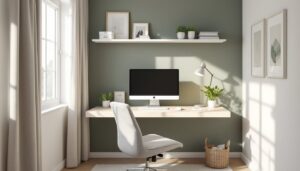
Wall-mounted shelves are the workhorse of small office design. A simple industrial metal frame shelving unit (36 to 48 inches wide) mounted at eye level gives ample storage without dominating the room. Floating shelves work too, though they typically support less weight than bracketed shelving.
Consider these placement strategies: Mount shelves above the desk for reference books and supplies you access during work. Use shelves behind or beside the desk for equipment, storage bins, and decorative pieces that don’t need daily handling. Leave the area directly behind your chair clear to avoid a hemmed-in feeling.
For tools and parts, pegboards paired with metal hooks and organizers keep everything visible and accessible. A pegboard (24 by 36 inches is common) takes up minimal wall space and holds far more than open shelves in the same footprint. Label baskets and bins so you find what you need without rummaging.
Don’t overlook corner shelving, corner units fit snugly into unused space and can hold a printer, filing cabinet, or decorative storage boxes. Corners often go to waste in small rooms, so claim that real estate. A corner shelf unit turning two walls into productive storage transforms an awkward angle into an asset.
Choose the Right Desk for Your Workflow
The desk is the anchor of any office, and choosing the right one sets the tone for the whole space. In a small room, the desk doesn’t need to be massive, it needs to be smart. Before shopping, ask: What does he actually do at this desk? If it’s mostly computer work, a narrow writing desk (36 to 48 inches wide) is plenty. If he’s handling paper, projects, or equipment, he’ll want a bit more surface area.
Compact Desk Styles That Fit Any Room
L-shaped desks are popular, but they’re not always the answer for tiny spaces. An L-desk eating up a corner can feel cramped. A single-pedestal desk (48 inches wide) with a small side table nearby often feels less bulky and leaves room to move.
Wall-mounted fold-down desks are heroes in tight quarters. When folded up, they vanish almost entirely: when down, they provide a legitimate 24- to 30-inch-deep work surface. Solid construction is important here, cheap hinges and flimsy materials fail fast. Look for heavy-duty piano hinges and at least half-inch-thick hardwood or plywood construction.
A standing desk or adjustable-height desk addresses ergonomics without taking up more floor space than a traditional seated desk. Prices range widely, but even a budget-friendly model (adjusting manually or electrically) beats hunching over a fixed desktop all day. Pair it with an ergonomic home workspace setup, proper monitor height, keyboard position, and chair support prevent back and neck strain.
Do not overlook corner desks. A corner desk (L-shaped or bent to fit the wall angle) uses two walls instead of one, doubling usable surface without adding depth into the room. Measure corner space carefully: walls rarely meet at perfect 90-degree angles, so gaps can happen. A corner desk measuring 48 by 48 inches can feel roomy in a 10-by-10-foot space.
Material matters. A solid wood desk (walnut, oak, or pine) ages well and hides minor scratches. Plywood or MDF under a veneer is more affordable and lighter if he plans to rearrange. Metal frames with wood or composite tops work in modern industrial settings and usually cost less than solid wood.
Lighting and Ergonomics for Productivity
Poor lighting and a bad chair kill productivity faster than a slow internet connection. Skimping on either is false economy.
Task lighting is non-negotiable. A desk lamp with an adjustable arm (LED preferred for efficiency and minimal heat) should land on the work surface, not cast shadows where his hands are. Pair it with ambient room lighting, overhead fixtures or wall sconces, to avoid harsh contrast. Ideally, light comes from the side or behind the monitor, not bouncing directly off the screen. If working near a window, blackout shades or blinds control glare during video calls and daytime work sessions.
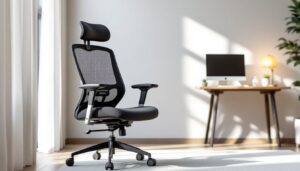
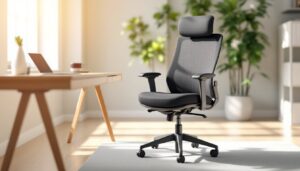
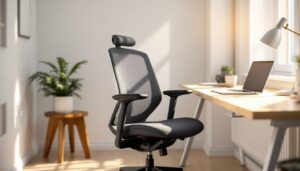
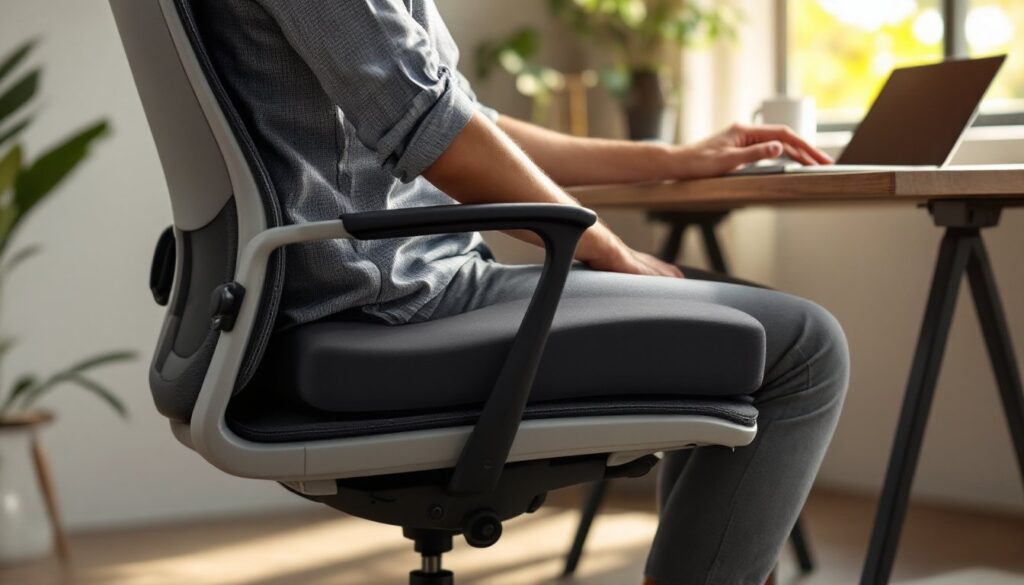
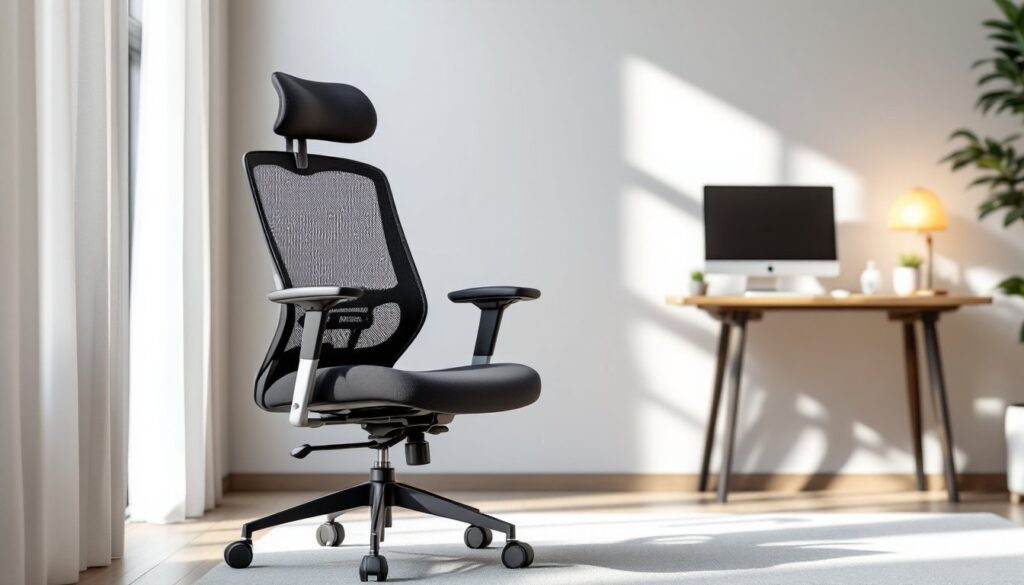
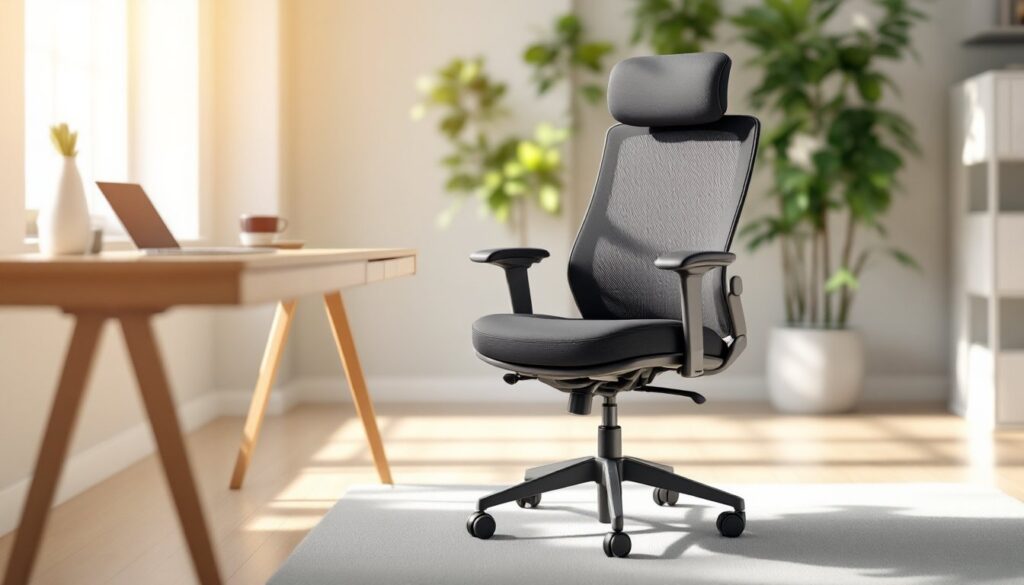
The chair is his second investment after the desk. An ergonomic home workspace demands a chair with lumbar support, adjustable height, and armrests. Budget models ($100 to $300) beat straight-back dining chairs by a mile. Mid-range office chairs ($300 to $800) offer better adjustability and durability for long workdays.
Monitor height matters. The top of the screen should be at eye level when sitting upright, roughly 20 to 26 inches from the face. Too low and he’s bending his neck down: too high and his eyes strain upward. A simple monitor stand or arm costs $40 to $150 and solves this instantly. The same goes for the keyboard and mouse, elbows should bend at roughly 90 degrees with shoulders relaxed.
Take breaks. Every 20 minutes, shift focus to something 20 feet away for 20 seconds (the “20-20-20” rule, per eyestrain research). Stand and move for 5 minutes every hour. These habits prevent fatigue-driven errors and back pain.
Industrial and Modern Aesthetic Ideas
A home office should feel like his space, not a corporate cubicle reject. Design style sets mood and focus.
Industrial style leans into exposed elements: raw wood, metal frames, concrete accents, and Edison-style bulbs. A steel-frame desk with reclaimed wood top feels authentic and durable. Exposed shelving with metal brackets reinforces the look. Incorporate a vintage clock, a worn leather chair, or factory-style pendant lighting. This approach feels approachable and suits maker-spaces, garages, or basements.
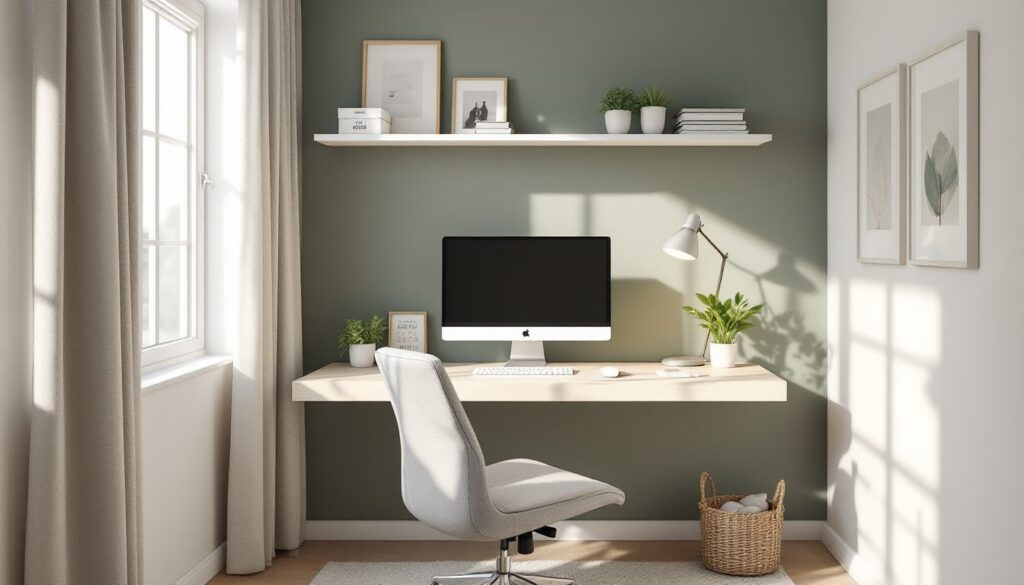
Modern minimalist keeps clutter off surfaces and visual noise low. Clean lines, neutral colors (white, gray, black, natural wood tones), and hidden storage dominate. A sleek desk with cable management built in, closed storage units hiding supplies, and one or two statement pieces (a plant, a piece of art) define the space. Minimalist offices are easier to clean and reduce decision fatigue.
Mid-century modern mixes function with warmth. Think tapered desk legs, warm wood tones, a leather or fabric chair with attitude, and thoughtful lighting like a tripod floor lamp or articulating desk lamp. Pair wood and metal finishes, both shine without fighting. This approach feels refined and works in living rooms or bedrooms.
Color grounds the mood. Attractive office design benefits from restraint: one accent color and a neutral base. A deep blue wall behind the desk adds personality without overwhelming a small room. Warm white or soft gray walls expand the feeling of space. Avoid hot pink, neon, or heavily patterned wallpaper that fatigues eyes over time.
Textiles soften hard spaces. A small area rug (4 by 6 feet or a runner) defines the office zone, muffles footsteps, and adds warmth. Look for a home office rug with subtle color and pattern that matches the overall aesthetic. A woven throw or cushion on the chair adds comfort without clashing.
Organization Hacks for Limited Square Footage
A small office explodes into chaos if not organized ruthlessly. Organization systems prevent the “I can’t find anything” panic.
Everything needs a home. Pens go in one cup, chargers in a drawer organizer, cables in a labeled box. When items scatter, they consume mental energy locating them. Closed storage (drawers, cabinets, boxes) hides clutter and frees visual space compared to open shelving. Mix open and closed: open shelves for items he uses daily and looks at happily, closed storage for supplies and archives.
Labeling is boring and essential. A label maker ($20 to $80) and a roll of labels solve the “what’s in this box?” mystery six months later. Label drawer dividers, storage bins, and filing system folders. This is especially critical if others might borrow supplies.
Vertical filing doesn’t waste floor space. A vertical file organizer or wall-mounted file holder keeps papers sorted without a full filing cabinet eating precious square footage. If he works with paper, a custom office setup may include a shallow filing cabinet tucked under the desk or on a cart that rolls out when needed.
Multi-function furniture earns its place. An office storage credenza with a work surface on top does double duty. A rolling cart holds supplies and slides under the desk or into a corner. An ottoman with interior storage functions as a seat, footrest, and hideaway. Each piece should justify the space it occupies.
Cord management prevents the spaghetti effect. Cable boxes, adhesive clips, and cable sleeves wrangle the mess behind the desk. A power strip with surge protection mounted on the wall or under the desk keeps outlets organized and accessible. Labeling cables at both ends saves debugging headaches when something stops working.
Sources like Real Simple offer proven organization systems that scale from apartments to sprawling homes. Adapt their strategies: one system works only if it matches how he naturally works.