Table of Contents
ToggleIf you spend eight or more hours a day sitting in a chair, you know how much that decision matters. A poorly designed chair doesn’t just feel uncomfortable, it can wreck your back, neck, and productivity. Sihoo office chairs have gained serious traction among home office workers for good reason: they combine thoughtful ergonomic design, quality materials, and reasonable pricing. Whether you’re setting up your first home office or replacing an old desk chair that’s seen better days, understanding what Sihoo brings to the table helps you make a choice that actually pays off. This guide walks you through the essentials, what makes these chairs tick, how they stack up health-wise, which models fit different spaces, and whether they’re a smart investment for your setup.
Key Takeaways
- Sihoo office chairs deliver ergonomic benefits like built-in lumbar support and breathable mesh backing at mid-range pricing ($200–$450), making them a practical alternative to premium brands costing $1,000+.
- Proper chair adjustments—including seat height, tilt tension, and armrest positioning—are critical for maintaining spinal alignment and reducing fatigue during 8+ hour workdays.
- The Sihoo Doro C300 suits budget-conscious users and occasional use, while the S100 and V1 Pro models are better for all-day workers who need advanced adjustability and refined materials.
- A Sihoo office chair typically lasts 5–8 years with proper maintenance, amortizing to just $25–$90 annually and far outlasting budget alternatives that degrade in 2–3 years.
- Measure your ceiling height, desk height, and available floor space before purchasing, as Sihoo chairs range from 45–48 inches tall and require consideration for clearance and ergonomic fit.
- Sihoo’s mesh design keeps heat and moisture from building up during extended sitting sessions, preventing slouching and discomfort that commonly derail posture and productivity throughout the day.
What Makes Sihoo Office Chairs Stand Out
Key Features and Design Philosophy
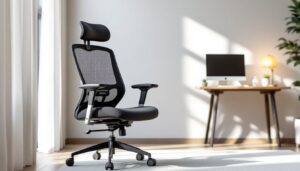
Sihoo has carved out a niche by focusing on mid-range ergonomic chairs that don’t pretend to be luxury furniture but deliver solid performance. The brand emphasizes three core ideas: proper lumbar support, breathable materials, and adjustability that actually works.
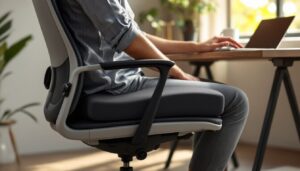
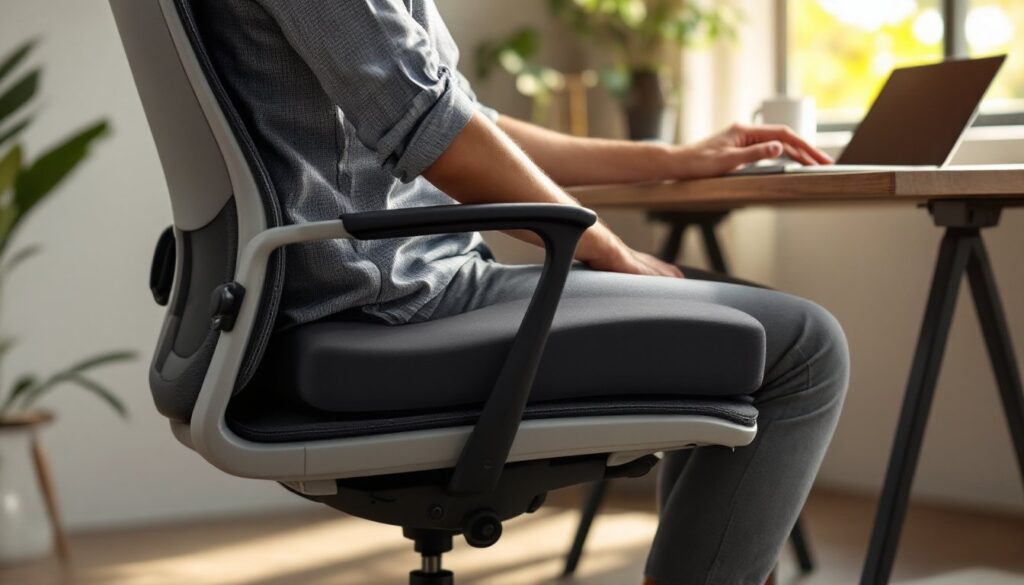
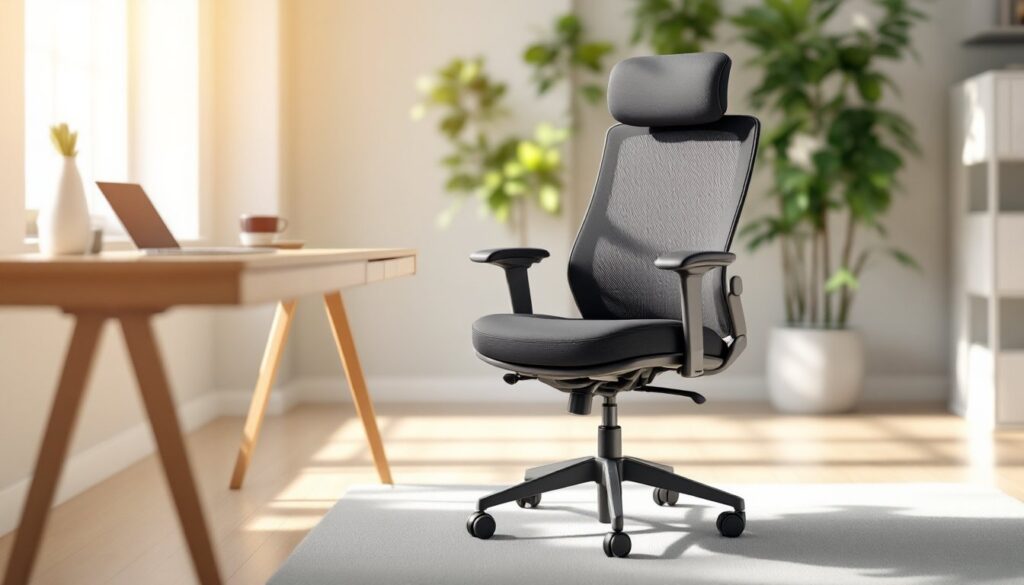
Most Sihoo models use a high-back design with pronounced lumbar curves built into the backrest. Unlike chairs that rely on a removable pillow (which inevitably slides around), this integrated approach means support stays where it needs to be. The seat padding uses memory foam or high-density foam depending on the model, which conforms to your shape without bottoming out after a year of use.
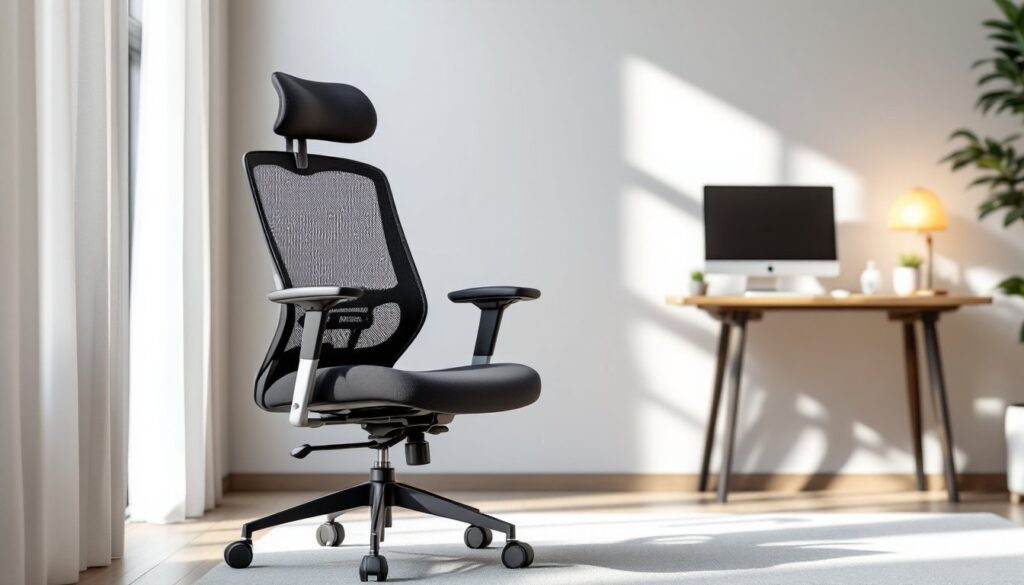
Mesh backing is standard across the lineup. This matters more than it sounds, mesh allows air circulation, so you’re not sitting in a sweat puddle by mid-afternoon. The breathable design keeps heat and moisture from building up, which means your actual sitting experience improves over an eight-hour workday.
Adjustability is where Sihoo doesn’t cut corners. You get height adjustment, tilt tension control, and armrests that move, either independently or as a fixed pair, depending on the model. These aren’t token features: they’re the actual levers that let you dial in your fit. The base typically uses five-point rolling casters with decent glide, suitable for hardwood and carpet alike.
Ergonomic Benefits and Health Advantages
Sitting wrong for hours compounds over weeks and months. Your spine doesn’t bend equally: the lumbar spine curves inward (lordosis), and poor chair design forces it to flatten or reverse, straining discs and ligaments. Sihoo chairs address this by maintaining that natural inward curve through built-in lumbar support.
Proper seat height keeps your thighs parallel to the floor and your feet flat, a simple rule that prevents pressure on the backs of your legs and reduces strain on your hips. Sihoo’s height-adjustable mechanism lets you dial in the exact position: many users find this single adjustment cuts fatigue noticeably.
Armrest positioning matters too. If armrests are too high or low, you end up shrugging or reaching, which tires your shoulders and neck. Sihoo models with adjustable or removable armrests let you set them level with your desk surface, so your elbows rest at roughly 90 degrees. This takes load off your upper spine.
The tilt mechanism, the part that lets the backrest recline, shouldn’t be an afterthought. A functional tilt with tension control lets you lean back without the chair collapsing or feeling unstable. Sihoo includes a tension knob that you adjust based on your weight and preference. Once set right, you can shift position throughout the day without fighting the chair.
Breathable mesh means your posture doesn’t degrade as thermal discomfort builds. Sweat and heat fatigue combine to make you fidget and slouch. Office comfort products that boost productivity often hinge on this seemingly small detail. A cooler seat keeps you focused and sitting properly longer.
Popular Sihoo Models for Home Offices
Sihoo’s lineup spans several tiers. The Sihoo Doro C300 is the entry-level workhorse, simpler armrests, basic adjustment options, but solid lumbar support and mesh backing. It’s the chair to grab if you want Sihoo ergonomics without premium pricing.
The Sihoo Doro S100 steps up with more refined adjustment points. Armrests slide and pivot independently, the backrest recline feels smoother, and the mesh is slightly higher quality. Reviewers across ergonomic office chair roundups note this model hits a sweet spot for people who transition between sitting and standing workstations throughout the day.
The Sihoo V1 Pro is the flagship. It uses finer mesh, a deeper seat pan, and adjustment mechanisms that feel more precise. The lumbar support is more pronounced, useful if you’ve had back issues. It costs more, but the difference in material quality and durability is noticeable. Recent reviews of the best ergonomic office chairs for 2026 highlight the V1 Pro for users working 8+ hours daily.
For smaller spaces, the Sihoo C200 offers a lower profile without sacrificing core support. The backrest sits slightly shorter, making it suitable for alcoves or rooms with limited clearance. Don’t assume “smaller” means less adjustable, it still includes height, tilt, and armrest controls.
Choosing between models boils down to budget, space, and intended use. Someone working four-hour sessions can get by with the C300. An all-day knowledge worker benefits from the S100 or V1 Pro. Measure your space first, the base footprint is roughly 27 inches wide, and clearance behind the chair matters if you lean back.
How to Choose the Right Sihoo Chair for Your Space
Start with three measurements: ceiling height, floor space, and desk height. Sihoo chairs typically stand 45–48 inches tall when fully adjusted. If your ceilings are 8 feet, you’re fine. If you’re in a loft with 7-foot ceilings, a lower-profile model like the C200 makes sense.
Next, measure from your seated position to the underside of your desk. Your forearms should rest parallel to the floor when your elbows are at 90 degrees. If your desk is 30 inches high (standard), you need a chair with seat height adjustable from roughly 17–21 inches. Sihoo’s standard range hits this. If your desk is custom height, verify the chair’s minimum and maximum height in the product specs.
Consider the base clearance too. Hardwood floors and low-pile carpet work fine with standard casters. If you have thick shag or high-pile carpet, rolling might feel sluggish, some users swap for hard-floor casters or place the chair on a desk mat for smoother movement.
Armrest type matters if you’ve got limited side space. Fixed armrests save money but give you zero wiggle room. Sliding, independent armrests (found on S100 and V1 Pro models) let you push them back or slide them in toward the seat. This flexibility helps if your desk is tight or you need to roll close for precise work.
Weight capacity varies slightly by model but typically maxes out around 275–300 pounds. If that’s a constraint, check the spec sheet before ordering.
Think about your daily routine. Do you transition between sitting and standing? The Doro S100 is built for frequent position changes. Do you sit 8+ hours straight? Invest in the V1 Pro. Budget-conscious and occasional use? The C300 delivers.
Setup and Maintenance Tips
Out of the box, most Sihoo chairs come partially assembled. You’ll bolt the base to the seat, snap on the backrest, and screw in the armrests. A Phillips head screwdriver and the included Allen wrench are all you need, expect 20–30 minutes.
Read the manual first. Seriously. Sihoo includes specific torque guidance for base bolts, and over-tightening strips threads. Under-tightening leaves the seat wobbly. Follow the spec.
Once assembled, adjust before you sit. Set the tilt tension by turning the adjustment knob under the seat, it should resist just enough that you can recline smoothly but the chair doesn’t feel floppy. Spin it clockwise to increase resistance, counterclockwise to loosen. Test by leaning back: if the chair feels unstable, tighten.
Height is next. Sit with your feet flat on the floor, thighs parallel to the ground. Use the pneumatic lever to raise or lower until that position is locked in. Armrests come last, adjust them so your elbows are at roughly 90 degrees when your arms rest on top.
Maintenance is straightforward. Mesh picks up dust. Vacuum the chair monthly or wipe with a slightly damp microfiber cloth. Avoid soaking the mesh or applying harsh cleaners: water and mild soap work fine. Check bolts twice a year, vibration over time can loosen them. Casters wear out eventually (after 5–10 years of heavy use), but they’re replaceable without replacing the whole chair.
If the pneumatic cylinder starts feeling squishy or won’t hold height, that’s a sign it’s nearing end of life. A furniture building or repair guide might walk you through replacement, but it’s a specialized task. Most users just budget for a new chair at that point.
Is a Sihoo Office Chair Worth the Investment
Price for Sihoo models ranges from roughly $200–$450 depending on the model and current sales. That’s significantly less than Herman Miller or Steelcase territory, where you’re paying $1,000+. It’s also more than a $80 plastic-backed chair from a big-box retailer.
The value proposition hinges on two things: durability and ergonomics. A cheap chair degrades in 2–3 years, foam compresses, mesh sags, adjustment mechanisms loosen. A Sihoo chair, with proper maintenance, holds up for 5–8 years. That amortizes to $25–$90 per year, which is reasonable for something you use 40+ hours a week.
Ergonomically, Sihoo isn’t in the league of premium brands, but it’s not pretending to be. The built-in lumbar support and breathable mesh address real issues that generic chairs don’t touch. If your current chair leaves you with back pain or afternoon fatigue, a Sihoo upgrade will likely feel transformative. If you already have a decent chair, the improvement might be marginal.
Consider your income and health trade-offs. If you’re freelancing or running a business from home, your chair affects your comfort, focus, and eventually your output. That productivity bump is worth money. If you’re using the chair sporadically for a side gig, the C300 is more than adequate.
One tip: buy from retailers with return windows. Sihoo’s warranty typically covers 1–2 years, but return policies vary. A 30-day trial lets you send it back if it doesn’t feel right, which removes a lot of risk. Modern design and furniture reviews often highlight how product fit depends on individual body type and preference, so a trial matters.
<h2 id="” data-id=””>Final Thoughts
A Sihoo office chair won’t transform your life, but it will transform your workday. The combination of built-in lumbar support, adjustable mechanics, and breathable materials addresses the main ways a bad chair wears you down. Pick a model that matches your budget and usage pattern, dial in the adjustments properly, and maintain it. You’ll notice the difference within a week, and your back will thank you months from now.