Table of Contents
ToggleIf you’ve spent hours hunched over a desk, you know that lower back pain and tight shoulders aren’t just uncomfortable, they’re productivity killers. An office chair with massage and heat features offers more than luxury: it’s a practical investment in your health and focus. These chairs combine ergonomic support with therapeutic technology that can ease muscle tension, improve circulation, and help you power through long workdays without physical strain. Whether you’re setting up a home office or upgrading your current setup, understanding how massage and heat functions work will help you choose a chair that actually delivers results.
Key Takeaways
- An office chair with massage and heat reduces lower back pain and tight shoulders by improving blood circulation and breaking up muscle knots, which sharpens focus during long workdays.
- Choose between vibration massage (gentler, all-day wear) or shiatsu massage (more intense, 15–30 minute sessions) based on your work habits and intensity preference.
- Proper lumbar support combined with heat therapy is essential—adjustable lumbar support lets you customize fit to your body type, preventing strain on intervertebral discs.
- Budget realistically: entry-level chairs cost $300–$600, mid-range models $600–$1,200, and premium chairs start at $1,200+; higher investment means better durability and quieter operation.
- Acclimate gradually over your first week with 15–20 minute sessions, then extend to 30 minutes as your muscles adjust and tension releases.
- Maintain your chair monthly by vacuuming vents, wiping upholstery, checking fasteners, and testing massage/heat functions to catch early failures before they require costly warranty claims.
Why Massage and Heat Features Matter for Your Home Office
Sitting for eight or more hours daily compresses your spine and tightens your posterior chain, your lower back, glutes, and hamstrings all suffer. Massage and heat aren’t gimmicks: they address real physiological problems. Heat increases blood flow to stiff muscles, which speeds up healing and reduces pain signals. Massage breaks up muscle knots and activates the nervous system’s relaxation response, lowering cortisol levels. Together, these features create a therapeutic environment at your desk, reducing the need for massage appointments or post-work stretching routines. Many people report sharper focus and fewer headaches within the first week of using a quality chair with these functions. The difference is noticeable because you’re not fighting your body’s discomfort while trying to work.
Key Benefits of Massage and Heat in Office Chairs
How Massage Technology Works
Modern office chairs use one of two massage technologies: vibration massage or shiatsu massage. Vibration systems use small motors beneath the backrest that pulse at different frequencies, targeting larger muscle groups. Shiatsu massage mimics traditional Japanese pressure-point therapy, with rollers that knead specific areas of your lumbar and thoracic spine in repeating patterns.
Vibration tends to be gentler and better for all-day wear, while shiatsu is more intense and works better for 15–30 minute sessions. Look for chairs that let you adjust intensity levels, usually three to five settings, so you can dial down the power if you’re sore. Some premium models offer targeted zones, letting you focus massage on your lower back versus upper back. The best chairs let you turn massage on and off independently from heat, since you might want warmth throughout the day but reserve massage for breaks.
Heat Functions and Lumbar Support
Heat therapy in office chairs typically comes from heating pads embedded in the backrest and seat, warming the lumbar (lower back) and sacral regions. Effective heat models reach around 104–122°F (40–50°C), warm enough to ease muscle tension without burning. Built-in thermostats prevent overheating: quality chairs have three to five temperature settings and auto-shutoff after 30 minutes of inactivity.
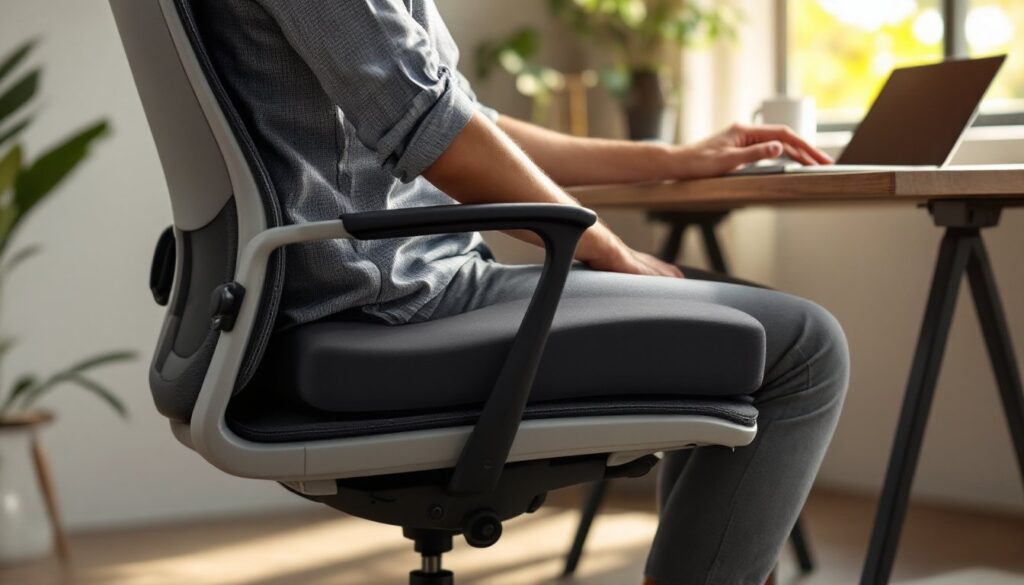
Lumbar support and heat work together. A chair with poor lumbar curvature won’t help you much, even with massage and heat. The best models have adjustable lumbar support, a dial or lever that lets you control how much the chair’s lower back support protrudes. This matters because everyone’s spine is different. A support that’s too aggressive for a petite person might not be enough for someone with a broader back. When combined with heat, proper lumbar support reduces strain on your intervertebral discs and distributes pressure evenly across your posterior chain.
What to Look for When Choosing the Right Chair
Start by assessing your body and work habits. If you’re under 200 pounds, look for chairs rated for 250–300 pounds for durability: those heavier should aim for 350+ pound capacity. Seat height adjustment range matters too, your feet should rest flat on the floor with your knees at a 90-degree angle. Most chairs adjust from about 18 to 22 inches, but if you’re very tall or short, check the specs.
Next, consider how long you sit. An all-day office worker benefits from chairs with adjustable lumbar support, mesh backrests for breathability, and moderate massage intensity. A person using the chair for 2–4 hours daily can handle a firmer backrest and more aggressive shiatsu massage. Check reviews on independent sites like those comparing best massage chairs of 2026 to see real-world reports on durability and actual thermal and massage performance.
Material quality directly affects longevity. Leather upholstery looks professional but traps heat: mesh fabric breathes better but shows wear faster. Mid-range synthetic leather balances both. Make sure the chair has a solid base, five-star bases with smooth-rolling casters are standard, but check the wheel material: hard plastic wheels suit hardwood floors, while softer wheels suit carpeting.
Budget realistically. Entry-level chairs with basic massage and heat run $300–$600. Mid-range models with better controls and durability cost $600–$1,200. Premium ergonomic chairs with advanced features and longer warranties start at $1,200 and go higher. More investment generally means better motor quality, quieter operation, and longer-lasting heating elements. Don’t assume the cheapest option will save money, a chair that breaks after two years costs more than one that lasts five.
Installation and Setup Tips for Your New Chair
Most office chairs arrive mostly assembled: you’ll typically only need to attach the base, armrests, and gas cylinder. This takes 15–30 minutes with a basic Phillips head screwdriver and wrench (usually included). Don’t skip the instruction manual, it shows you where to plug in the massage and heat power cord, which is often hidden under the seat cushion.
Once assembled, spend time adjusting every control. Sit in the chair and set the seat height so your thighs are parallel to the floor. Adjust the backrest angle, armrest height, and lumbar support curve. Most people want their lumbar support pointing directly at the natural curve in their lower back, roughly 2–4 inches above the seat cushion. Test the massage at low intensity first, shiatsu can feel jarring if you jump straight to maximum power.
Acclimate gradually. Use massage and heat for 15–20 minutes during your first week. Your muscles might feel sore, similar to a deep tissue massage, as tension releases. This is normal. After a week, you can extend sessions to 30 minutes. Many users find sweet spots: light massage with medium heat during the workday, stronger massage during lunch breaks. Keep the power cord in a safe location behind your desk to avoid tripping hazards. Some office comfort products include cord organizers or desk grommets: use them to route the cable neatly.
If you have standing desk options or frequently switch positions, make sure the chair’s height range accommodates both sitting and brief standing transitions. Test the tilt mechanism if your model has one, a good tilt should lock at various angles, supporting both upright work and reclined breaks.
Maintenance and Care to Keep Your Chair in Top Condition
Regular upkeep extends your chair’s life significantly. Vacuum the seat and backrest monthly using a soft-brush attachment to prevent dust from clogging the massage motor vents. If you spill liquid on the upholstery, blot it immediately with a dry cloth and allow it to air-dry completely before using the heat function, moisture and electricity don’t mix.
For leather or synthetic leather, wipe down monthly with a slightly damp microfiber cloth. For mesh, use a soft brush to agitate fibers and dislodge particles. Never soak the chair or use aggressive cleaners. If the backrest or seat sags over time, check if lumbar support or seat-height adjustments have shifted: tightening fasteners often restores support. Most chairs’ gas cylinders last 5–7 years before slowly losing height-holding capacity. When replacement happens, a new cylinder costs $20–$50 and swaps out with basic tools.
Massage motors and heating elements are sealed units and can’t be repaired individually: if they fail, you’ll likely need warranty service or replacement. This is why buying from reputable manufacturers with 3–5 year warranties is smart. Keep your receipt and warranty information in a file. Test both massage and heat functions monthly to catch early failures. Articles like expert-tested massage chair reviews often discuss durability and warranty support, which can guide long-term maintenance expectations. If you notice unusual noises, intermittent operation, or loss of heat, contact the manufacturer before attempting any DIY repair.